Turf to Habitat Conversions: Meadows and Buffers
WHAT is happening to the park?
Nine parks across Bucks County are converting mowed turf into native meadow and riparian buffers. Here’s the short version of why, how, and who’s behind it — for the whole program, and for the site you’re standing in.
Why?
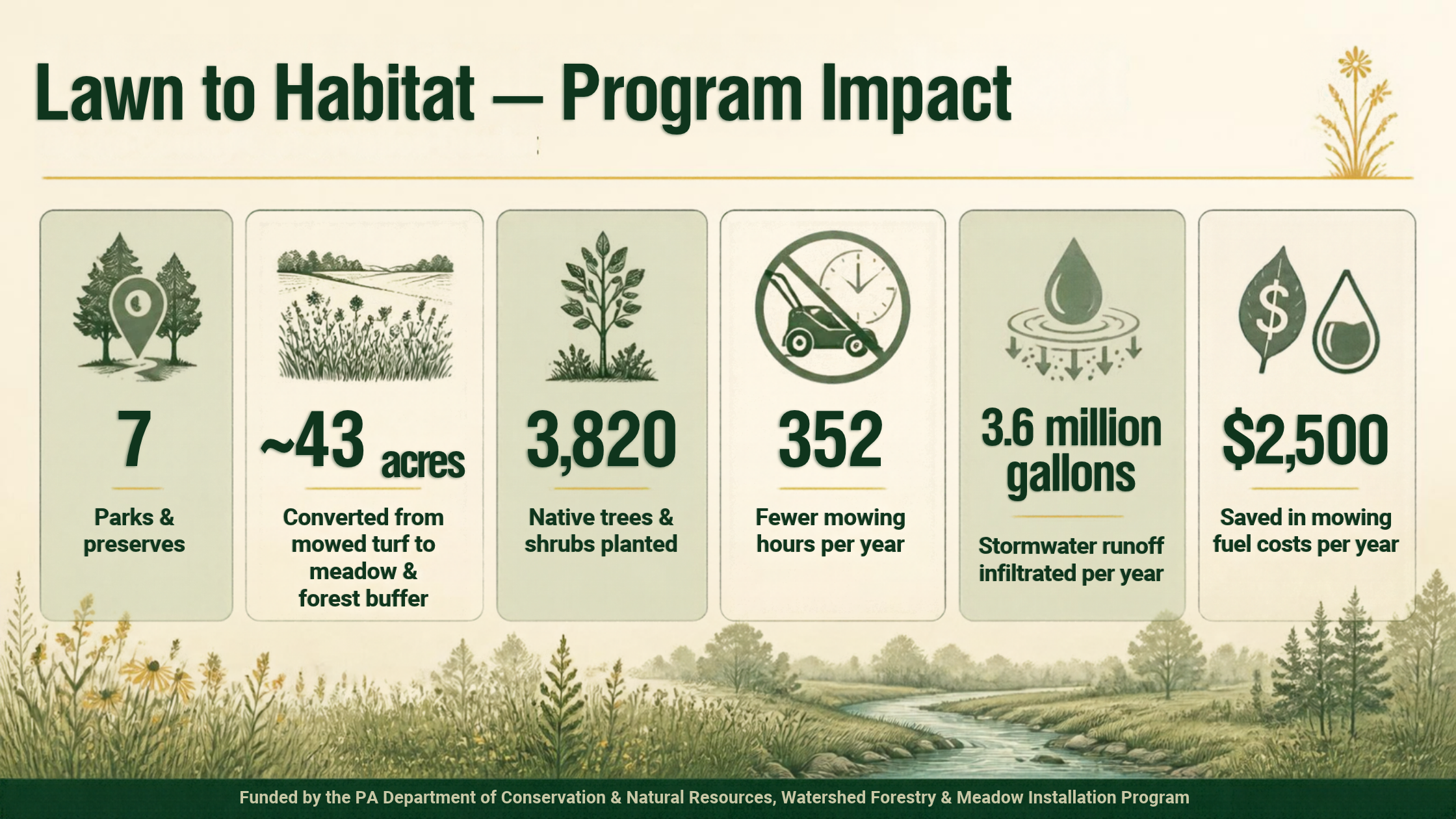
Regularly mowed turf grass does very little for wildlife, while letting rain wash pollution straight into our creeks, lakes, and eventually the Delaware River. A meadow or a streamside forest buffer slows that water down, sends it downward into the soil and filters it, gives bees, butterflies, and birds a place to actually live, and — as the new trees grow — shades trails and cools the streams below for fish and other aquatic life. It also means less mowing — less fuel, less noise, and lower cost — for the parks and townships that care for this land.
Who?
The projects are funded by PA Department of Conservation of Natural Resources who directly contract the work to ecological restoration professionals. The work is being facilitated by the Bucks County Conservation District. Municipal landowners have been involved in site selection and design and will take over maintenance in the second year of establishment. Community partners are invited to participate in long term monitoring and management of the new habitats.
How?
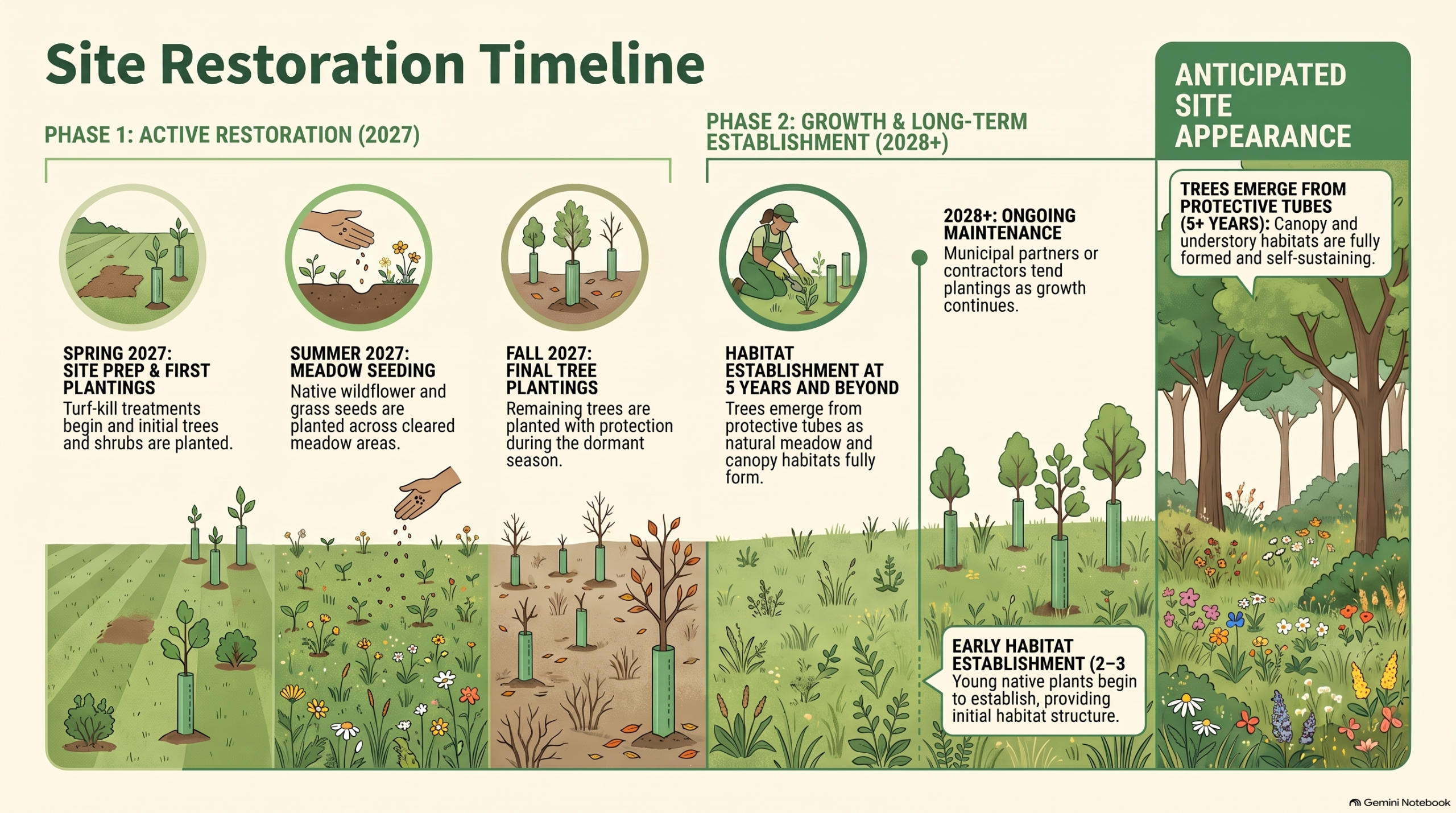
Every site follows the same five stages, just on its own calendar. Whether the conversion is turf to meadow, or turf to riparian buffer, installation will span from April 2027 – April 2028. Once installation is complete, monitoring and maintenance ensure successful establishment.
Looks Rough Before it Looks Good
Existing grass will be killed through chemical applications. Applied by certified ecological restoration professionals, the minimum amount of chemicals will be used to accomplish objectives. Any short term impact will be dwarfed by the long term benefit of restored native habitat.
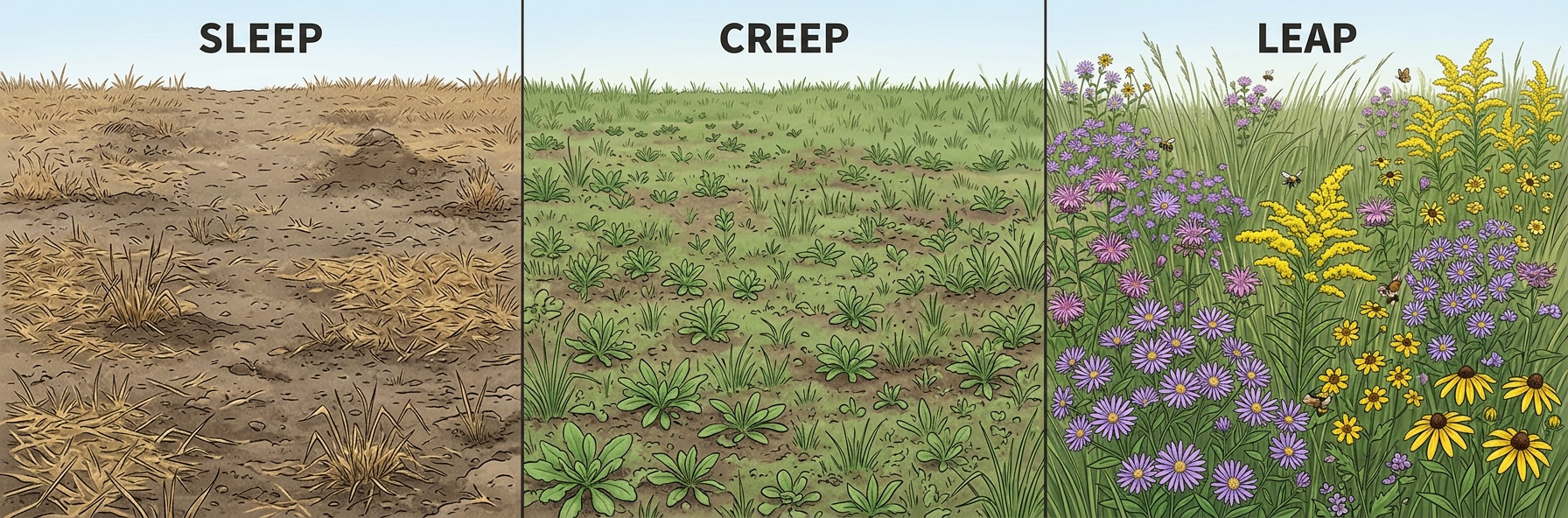
Herbicide-treated turf and bare, freshly seeded ground don’t look like “habitat” yet — they can look neglected. That’s a normal, expected part of every meadow and forest planting, not a sign that something went wrong. It is said that new meadows SLEEP – CREEP – LEAP. The first 1- 3 years, the seeded perennial plants put their energy into their roots. Then, around year three, they are ready to send more energy to flowering.
Tree tubes are not particularly attractive, but they are absolutely necessary in our deer-dense county. Intense deer herbivory can weaken and kill young trees. Even as the trees top out of their tubes, the tubes protect still tender trunks from buck rub – when male deer rub their antlers on trees to mark their territory by scent and a physical marking. Tubes will come off when trunks out grow them.
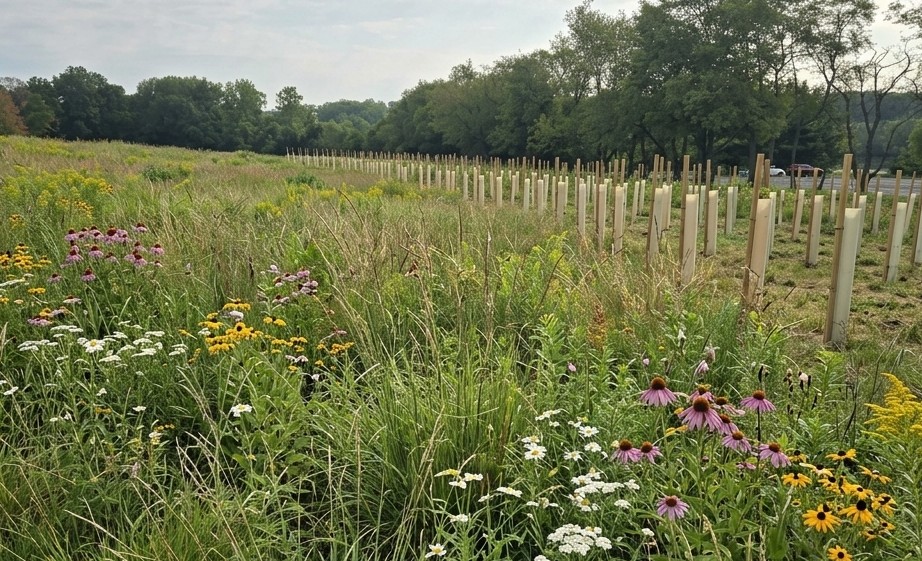
Look for the cues that someone’s taking care of the place that may look a little wild: mowed borders and paths are left open on purpose, so visitors can observe and experience the change. As native plants establish, the animals in our native food webs will also return. If these changes leave you wondering about health and safety issues, please have a look at Frequently Asked Questions.
Where?
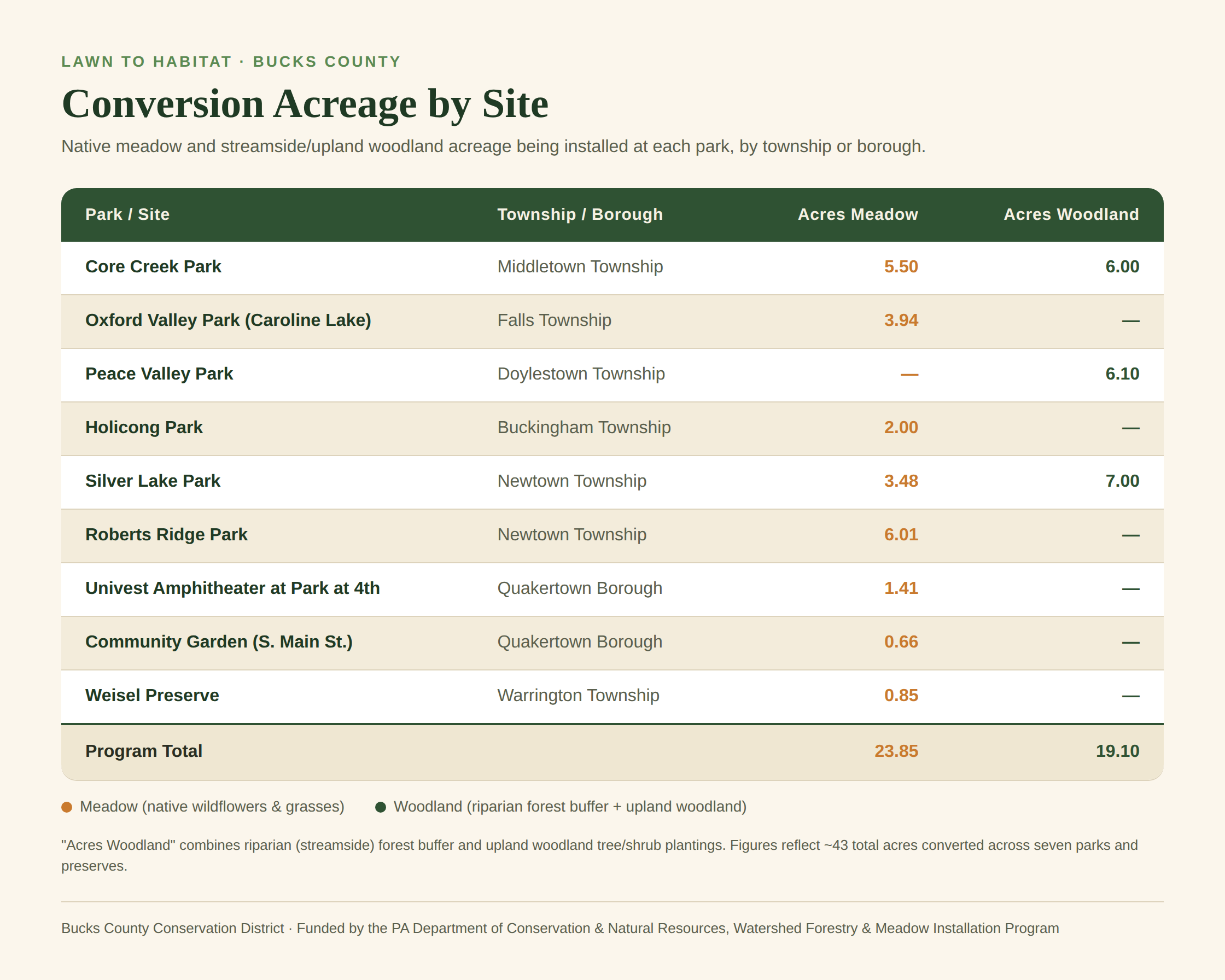
Nine parks in seven townships will receive one or more meadow or tree installations as described in the table below.